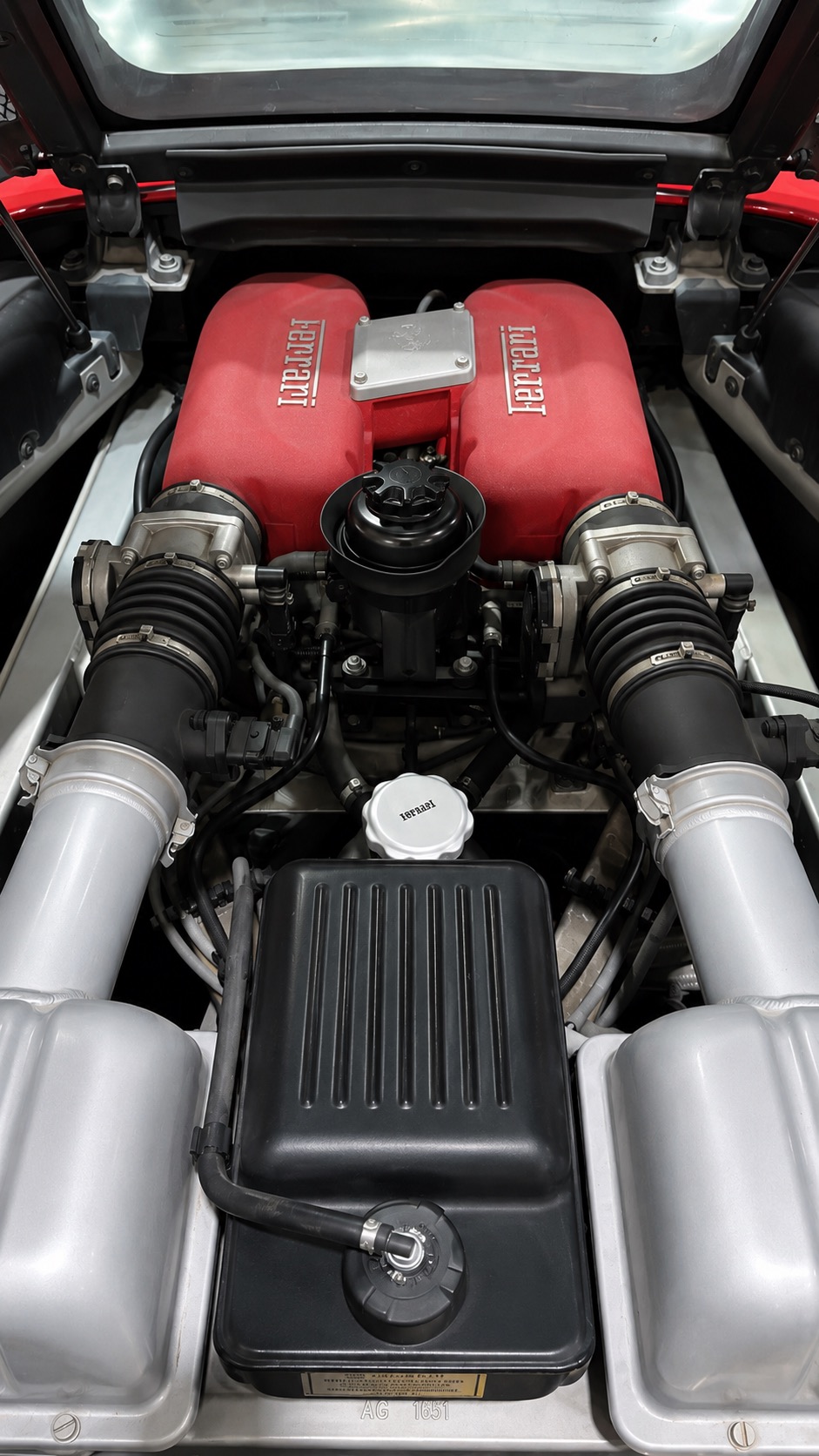
Ferrari in the DIGI-TEC Performance Centre workshop in Dubai

    Independent Ferrari model expertise

    Ferrari Roma Service & Repair Dubai

    The Roma is a front-mid-engine Ferrari GT with a 3.9-litre turbocharged V8 and the newer eight-speed dual-clutch transmission. Its packaging, chassis electronics, comfort systems and usage pattern differ from the mid-engine 488 and F8, so the service plan must be Roma-specific.

    Send the VIN, year, mileage, service history, exact warning text and when the symptom occurs. Scope and diagnostic compatibility are confirmed for the vehicle before work is agreed.

    Vehicle scope

    What this Roma page covers

    Ferrari names can span different model years, drivetrains and equipment. The VIN and fitted hardware remain authoritative.

    • Ferrari Roma coupé and Roma Spider, with roof, body and model-year differences identified before work.
    • Daily-used, touring, low-mileage and stored vehicles, each of which can create a different inspection priority.
    • Standard and modified vehicles after the installed hardware and software changes are documented.

    Model-specific systems

    A Ferrari repair plan starts with the fitted system

    Roma maintenance and GT usage

    Roma service scope should reflect its schedule, history, time, mileage and real use rather than adopting a mid-engine Ferrari checklist.

    • Review engine oil, filters, fluid condition, tyres, brakes, battery and climate performance.
    • Account for short trips, extended parking, touring and frequent AC use when planning checks.
    • Confirm supported service-reset and diagnostic-report functions before quoting them.

    3.9-litre turbocharged V8

    The Roma uses a front-mid-mounted 3.9-litre turbo V8 from the F154 family, with Roma-specific hardware and calibration.

    • Misfire, boost, temperature, oil or fuel symptoms can have several interacting causes.
    • Inspect the intake, ignition, fuel, cooling, turbo and exhaust systems according to the complaint.
    • Do not substitute 488 or F8 oil, cooling or parts information without vehicle confirmation.

    Eight-speed F1 dual-clutch transmission

    The Roma uses Ferrari’s newer eight-speed dual-clutch transmission, not the seven-speed unit used by the 488 and F8.

    • Document shift quality, engagement, temperature, warning text and the conditions that reproduce the complaint.
    • Review supported data and separate engine, mount and driveline inputs from a gearbox fault.
    • Verify fluid, parts, functions and repair availability for the exact unit before work.

    SCM-E Frs, SSC 6.0 and FDE

    Roma chassis control integrates electronically controlled damping and dynamic-control systems that differ from both older Ferrari GTs and the F8.

    • Inspect dampers, arms, bushes, sensors, wiring, alignment, wheels and tyres as one diagnostic path.
    • A dynamic-control warning does not establish whether the fault is mechanical, electrical or calibration-related.
    • The Roma should not be described using generic air-suspension terminology.

    Cooling, AC and everyday operation

    The Roma’s GT use can combine stop-start traffic, sustained AC demand and turbocharged-engine heat, making airflow and cooling condition important inspection areas.

    • Check condenser and radiator condition, fans, coolant circuits and available temperature data as appropriate.
    • Diagnose weak AC using pressures, temperatures, airflow and leak testing rather than an automatic regas.
    • Confirm refrigerant and equipment compatibility from the vehicle before connection.

    Electrical, comfort and brake systems

    Roma diagnostics may involve powertrain, chassis, body, infotainment, roof or comfort modules depending on the exact variant and symptom.

    • Low-voltage testing may be relevant after storage or repeated warnings, but it does not replace module diagnosis.
    • Inspect brake hardware and fluid using the vehicle-specific system and condition rather than a generic Ferrari interval.
    • Module programming or special functions are promised only after compatibility and access are confirmed.

    Warnings and symptoms to document

    • Check-engine or reduced-performance warning, misfire or hesitation.
    • Gearbox warning, harsh or delayed engagement, or inability to select a drive mode.
    • Cooling warning, coolant odour, fluid loss or repeated high-temperature message.
    • Chassis, suspension or stability warning with a change in ride or handling.
    • Persistent body, infotainment, roof or comfort-system fault.
    • Brake warning, pedal change, vibration or unusual noise.

    Our diagnostic approach

    1. 1.Identify Roma or Roma Spider, model year, equipment, changes and service history.
    2. 2.Record the exact warning and whether the concern is temperature-, speed- or time-dependent.
    3. 3.Scan the relevant supported modules and preserve useful data before clearing anything.
    4. 4.Perform the mechanical, electrical, pressure or leak tests required by the evidence.
    5. 5.Provide a staged repair and verification plan where the concern cannot be proven in one step.

    Dubai ownership context

    Heat, traffic, dust and storage all affect the inspection

    Stop-start traffic and heavy AC use can reveal marginal cooling or electrical condition without being the sole cause.

    Stored GT vehicles still need battery, tyre, brake and fluid-condition attention.

    Long road trips should follow checks of tyres, cooling, fluids and recorded warnings appropriate to the vehicle.

    Dust exposure can be considered during airflow inspection without assuming that every heat issue comes from blockage.

    Questions before booking

    Roma service FAQ

    These answers set expectations; vehicle-specific advice follows VIN and condition checks.

    Independent Ferrari workshop in Al Quoz

    Arrange a Ferrari Roma inspection

    DIGI-TEC is independent and is not affiliated with Ferrari S.p.A. Vehicle scope, diagnostic access and the proposed repair are confirmed before work begins.