
Swirl marks
Fine, circular-looking marks around a light reflection.
Often shallow wash-related scratches. Correction may improve them within the paint’s safe limits.
DIGI-TEC Performance Center / Dubai
Swirled, scratched or dull paint?
Our car polishing service in Al Quoz, Dubai starts with your paint’s condition. Discuss which marks can safely improve and get a quote for the assessed scope.
Finish enhancement / Defect correction
Car polishing uses a suitable polish and technique to improve clarity, gloss and certain surface imperfections. Machine polishing can refine a sound finish by removing a small amount of material where an abrasive polish is used.
It cannot replace missing paint, fill a stone chip, straighten a dent or repair peeling clear coat. The right starting point is the condition of your car’s finish.
Paint correction is a more deliberate approach to improving assessed paint defects. Swirl marks, light scratches, haze and some water spotting or oxidation may be correctable, but no single process is right for every car.
Defect depth, clear-coat condition, previous repairs and the amount of material available for safe correction all matter. The goal is a suitable improvement while preserving the finish.
Start with what you can see
Strong Dubai sunlight can make fine marks obvious. Tell us when you notice them and whether the car has been repainted, polished or protected before.
Fine, circular-looking marks around a light reflection.
Often shallow wash-related scratches. Correction may improve them within the paint’s safe limits.
Fine lines that interrupt the reflection in the paint.
Some clear-coat marks may be improved. Depth and remaining clear coat determine what is safe.
Cloudy reflections or paint that looks flat after washing.
Polishing may improve clarity where the finish is sound. Clear-coat failure needs a different repair.
Mineral rings, outlines or etched marks after water dries.
Surface deposits and deeper etching need different treatment. Some marks may remain after safe correction.
A faded or chalky-looking finish with reduced clarity.
Some oxidation can be improved, depending on the paint system and condition. Peeling or failed clear coat cannot be polished back.
Holograms, trails or uneven reflections under strong light.
Refinement may help, but previous work and paint condition must be assessed first.
Bonded deposits or a rough-feeling surface after washing.
Appropriate cleaning may be needed before deciding whether polishing is necessary. Contamination is not automatically a paint defect.
Scratch removal starts with depth
Some can. Very light clear-coat marks may improve with suitable polishing. Moderate scratches need a closer assessment: reducing their visibility may be safer than trying to remove them completely.
Deep scratches that reach beyond safely correctable layers may need touch-up or refinishing. Paint correction does not repair dents or replace paint lost to chips.
Explore body and paint repair for deeper damageFine marks. Interrupted reflections.
Swirl marks are fine scratches that become easy to see around a bright reflection. Dust trapped in wash materials, wiping dry paint or unsuitable previous polishing can leave these marks. Sunlight and inspection lighting make them more visible, particularly on dark colours.
Appropriate polishing or correction can often improve shallow swirls. Afterward, gentle washing, clean materials and avoiding dry dust removal help preserve the improvement. Repeated aggressive polishing is not a substitute for careful maintenance.
The scope matters more than the label
These terms overlap: polishing is a technique used in correction. The distinction below helps frame the result you want, without assuming your car needs the most intensive option.
| Consideration | Polishing / paint enhancement | Paint correction |
|---|---|---|
| Purpose | Improve gloss and clarity; address suitable minor marks | Target assessed defects while respecting paint limits |
| Vehicle condition | Sound paint mainly needing a fresher appearance | Swirls, scratches, haze or other defects needing closer assessment |
| Process intensity | Chosen for the finish and desired enhancement | Chosen for defect depth, paint condition and safe correction |
| Assessment | Check paint condition and previous work | Review the defects, previous work and achievable improvement |
| Expected result | Improved appearance where the paint is suitable | Reduction of safely correctable defects; some marks may remain |
| Time required | Confirmed from vehicle and agreed scope | Confirmed from preparation and correction required |
| Protection afterward | Consider compatible coating or film and careful washing | Consider compatible coating or film and careful washing |
Preserve the paint you have
Begin with inspection, not an automatic correction package. DIGI-TEC assesses paint condition and preparation needs before a paint-care scope is agreed. Tell the team about repainting, previous correction and any existing film or coating.
Available paint thickness and clear-coat condition influence what can safely be corrected. Ask how suitability will be assessed for your car, what improvement is realistic and which marks should be left alone or repaired differently.
Matte or satin paint needs a different approach: conventional gloss polishing can change its appearance. Identify the finish before any correction is proposed.
Technique follows the assessment
Machine polishing works a suitable polish across the finish to refine gloss and reduce assessed surface marks. The polish, pad and technique need to suit the paint, the affected area and the improvement being sought. A machine does not make a deep scratch safely removable.
Preparation comes first: washing and appropriate removal of bonded contamination help reveal the condition of the paint. Existing wax, coating or film also affects the agreed work. Correction is considered where the inspected finish justifies it, with particular care around edges and previously repaired areas.
Discuss the desired finish and safe limits before agreeing the work. The number of polishing steps follows the paint’s needs; it is not a promise that every visible defect will disappear.
From concern to agreed finish
The exact preparation and correction method are agreed for the vehicle. The existing paint-care service is based on assessment, a defined scope and a product-appropriate finish.
Share the paint concerns, previous repairs and desired result. Photos can begin the conversation; suitability is assessed on the car.
Review the required preparation, areas to be treated and realistic limits. Cleaning, contamination and existing protection affect the plan.
Polishing or correction is matched to the assessed finish and approved scope. More intensive work is not automatically the right choice.
Review the finish and any remaining defects with the team. Discuss suitable care and whether ceramic coating or PPF fits your priorities.
Plan the work around your paint
Vehicle size, paint condition, defect severity, previous paintwork, preparation and the amount of correction required affect the quote. Protection afterward is a separate scope to discuss.
Improve gloss, clarity and suitable minor surface imperfections.
Discuss paint enhancement when your main concern is a dull or hazy finish, with limited defect correction needed.
Price based on vehicle & paint condition
Get an Exact Quote for Your CarTarget swirl marks and other safely correctable paint defects.
Discuss correction when visible marks require closer assessment and a more deliberate plan for the affected paint.
Price based on vehicle & paint condition
Get Paint Assessment & QuoteThese describe different objectives for assessment, not fixed stage-based packages or guaranteed levels of scratch removal.
After the improvement
Polishing improves the finish; it does not provide long-term protective coverage by itself. Choose any follow-on protection around your driving, care routine and paint condition.
Preserve the improvement
Rinse loose dust before contact washing, use clean wash materials and avoid wiping a dusty panel dry. Wash and dry with methods suited to your finish, following any coating or film instructions supplied with the work.
Ask when the car can first be washed if protection is applied afterward; application and curing requirements depend on the selected product. If new marks appear, have them assessed before using abrasive polish. Regular careful washing is preferable to repeatedly correcting the same paint.
Understand coating preparation and ongoing paint care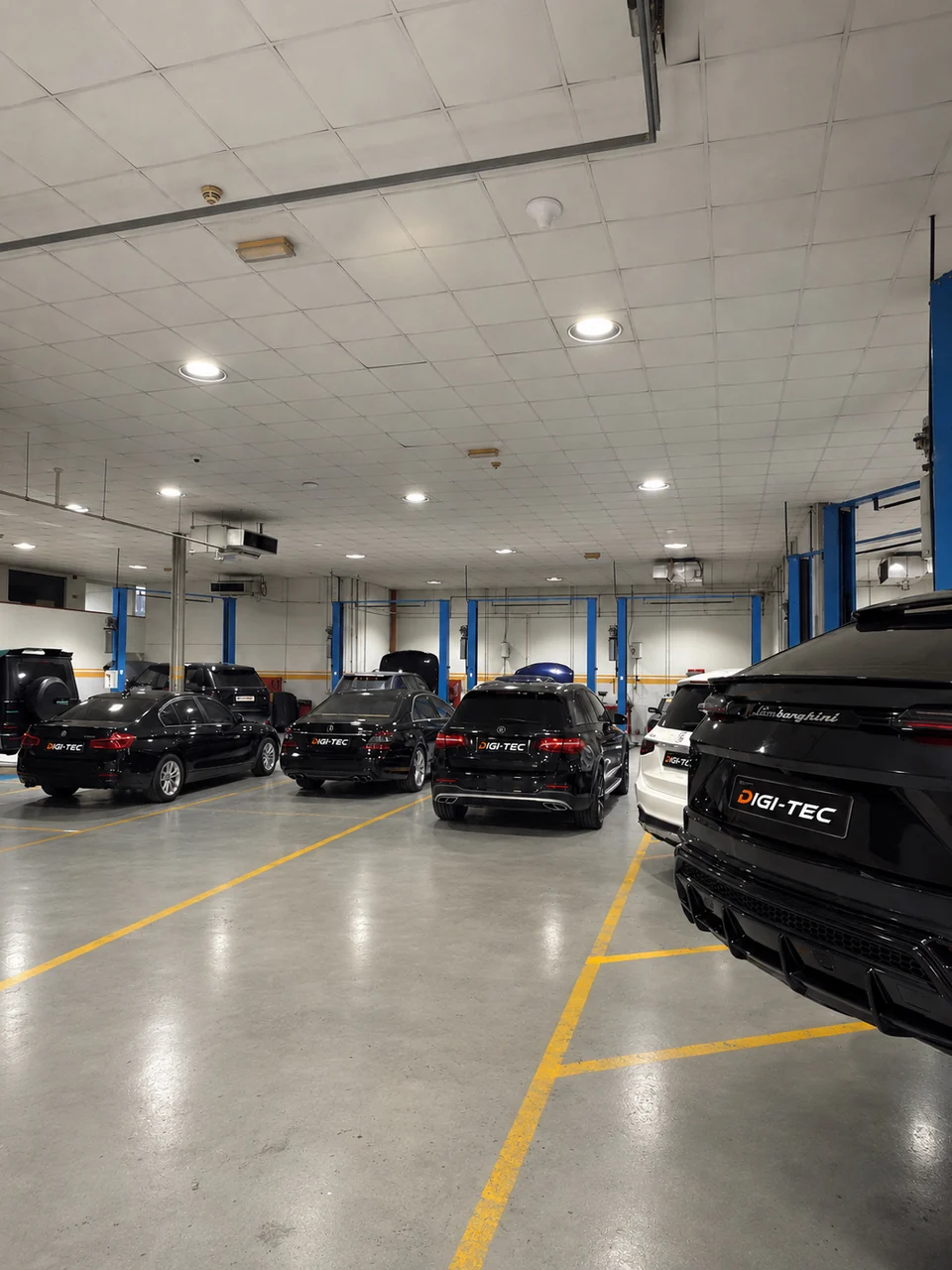
An independent Dubai workshop
DIGI-TEC’s paint-care offering includes paint correction, ceramic coating and PPF, alongside body repair. That allows the discussion to start with the actual condition of your car and whether it needs correction, protection or a different repair.
Ask to see recent correction work relevant to your paint concerns and discuss what improvement is realistic for your car.
About DIGI-TEC Performance CenterCare for the finish, not just the badge
Original paint, repaired panels and special finishes need individual consideration. Owners of high-value cars may prefer a measured improvement that preserves the finish over chasing every mark. Explore DIGI-TEC’s existing brand workshop pages, then discuss the paint and history of your exact vehicle.
DIGI-TEC is an independent workshop. Manufacturer names identify the vehicles discussed.
Start with your car
Send your model, year and main concern. You can attach photos in WhatsApp and ask which areas may improve with polishing or paint correction.
Include a wider panel view and a close-up that shows the marks. An exact quote or correction recommendation may require inspection at the workshop.
Send Us Photos on WhatsAppKnow what to expect
Car polishing uses a polish and suitable technique to improve paint clarity and gloss and reduce some surface imperfections. Abrasive polishing removes a small amount of the finish, so the method must suit the paint condition. It does not repair dents, chips or missing paint.
Paint correction is a deliberate assessment and polishing process aimed at improving defects such as swirl marks, haze and suitable light scratches. The achievable result depends on defect depth, paint condition, previous repairs and safe correction limits.
Polishing describes a technique that can enhance gloss and reduce minor marks. Paint correction describes a more targeted plan for assessed defects and may use polishing as part of that work. Neither provides long-term protective coverage by itself; suitable coating or film is a separate service to discuss.
Car polishing cost depends on vehicle size, paint condition, preparation and the improvement required. Optional protection afterward affects the total too. Send DIGI-TEC the model, year and paint concerns for a quotation; an in-person assessment may be needed.
Paint correction pricing depends on the affected area, defect severity, previous paintwork, preparation and the amount of safe correction required. DIGI-TEC confirms the scope and cost for the vehicle rather than quoting one universal correction price.
Some light marks within the clear coat can be improved or removed by suitable polishing. A photograph can help start the conversation, but it cannot reliably establish scratch depth or the remaining clear coat. The paint needs assessment before a removal claim can be made.
Deep scratches may extend beyond the layers that can safely be corrected. Chasing them with more polishing can remove too much finish. Touch-up, refinishing or body and paint repair may be more appropriate, and some marks may need to remain.
Many shallow swirl marks can be improved through appropriate polishing or correction. The result depends on the paint and scratch depth. Gentle washing and clean wash materials help reduce the chance of new wash-related marks afterward.
Some water spots are mineral deposits on the surface; others have etched into the finish. Cleaning or correction may help, but deeper etching may not be safely removable. The appropriate treatment depends on inspection.
Polishing may improve gloss and clarity on a sound paint finish. Oxidation, contamination and previous polishing can contribute to dullness, but peeling clear coat, missing paint or other finish failure require different repair methods.
Abrasive polishing removes a small amount of material. Excessive or unsuitable polishing can thin or damage the finish, especially on edges or previously corrected areas. The aim is suitable improvement while preserving paint, rather than removing every visible mark.
There is no universal schedule for abrasive polishing. Base it on paint condition and previous work rather than polishing at every wash. Good washing and suitable protection can reduce the need for repeated correction.
Time depends on vehicle size, defect severity, preparation and the agreed correction and protection scope. DIGI-TEC confirms the expected workshop time after assessing the vehicle; a photo enquiry is an initial discussion, not a fixed turnaround promise.
A suitable ceramic coating can be considered after the paint is prepared to help with water behaviour, cleaning and finish maintenance. Product properties and care vary. Coating does not remove defects or make the car scratch-proof.
PPF can be considered after suitable preparation, subject to the paint condition and selected film’s requirements. Film does not correct defects in the underlying paint. Confirm preparation, coverage, product compatibility and timing with the workshop.
Start with a paint assessment. Describe the marks, previous repairs or polishing, and the finish you want. Clear-coat condition and remaining material limit safe correction. Ask the team to explain what can improve, what may remain and what needs a different repair.
Car polishing near you in Dubai
Discuss the paint condition before visiting and confirm current opening hours and appointment availability. The team can advise on the appropriate next assessment.
View the workshop area