
Identify the symptom
Record the warning text, temperature, gear, speed, parking duration or other condition that makes it repeatable.
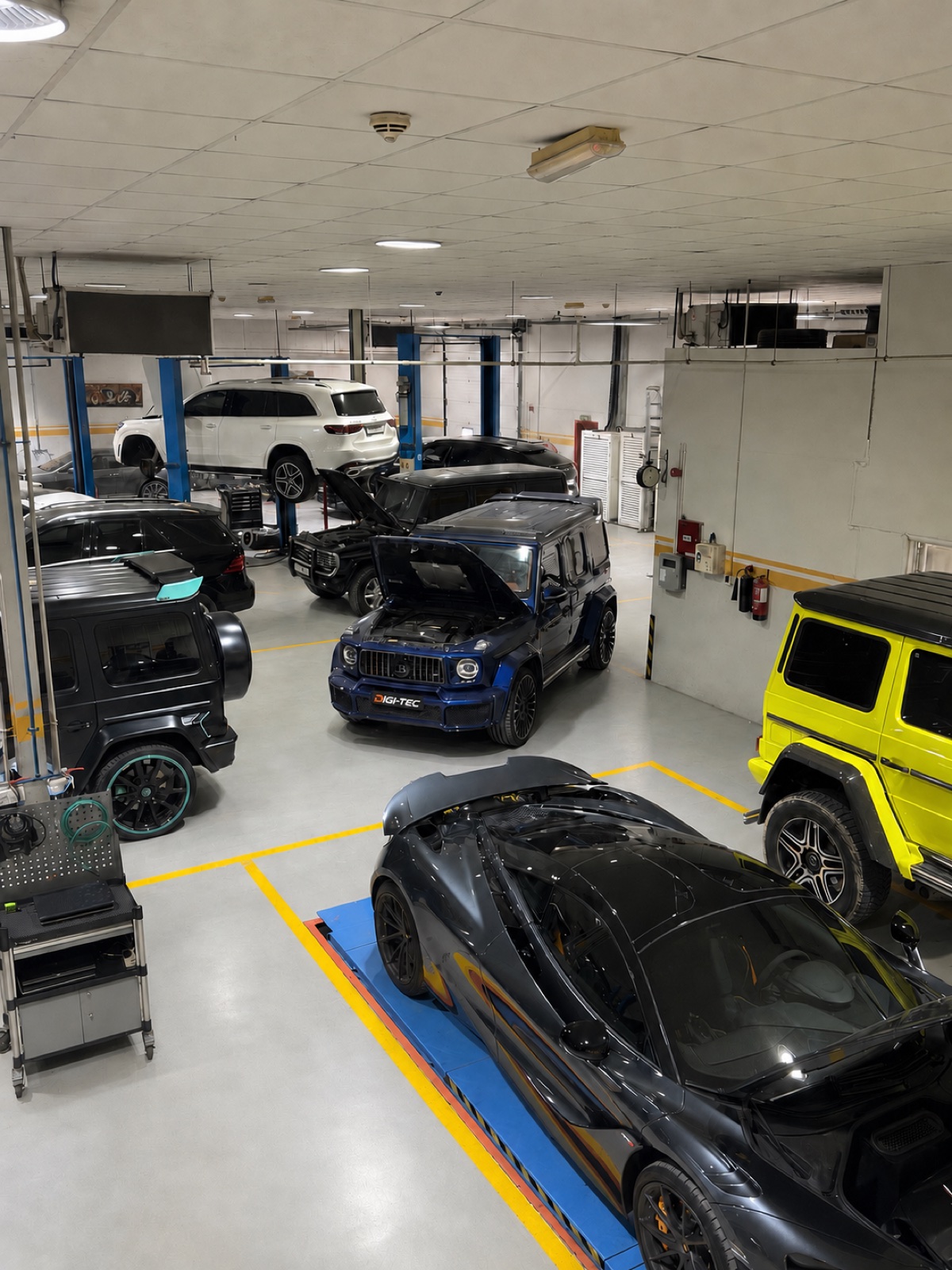
Owner-first diagnostic information
Start with the warning or behaviour you can describe: a low suspension corner, harsh gear change, rising temperature, weak AC or a car that will not start. Each guide explains possible causes, when to stop driving and what a workshop should check before recommending repairs.
An AIRMATIC warning means the suspension control system has detected a condition outside its expected range. It does not identify which component failed, and it does not automatically mean the compressor or all four air struts need replacement.
Read diagnostic guideA Mercedes that sits lower after several hours is showing a height-retention symptom. On an air-equipped model, the pattern—one corner, one axle or the whole vehicle—helps direct leak testing, but the parked position alone does not prove which component is leaking.
Read diagnostic guide“Jerking” can mean a sharp upshift, a thump into Drive, a bump during coast-down or a shudder under light acceleration. Those are different events. Identifying the gear, temperature, load and direction of torque is more useful than replacing parts from a code list.
Read diagnostic guideTransmission slip is a mismatch between engine speed and the vehicle acceleration or commanded gear. Owners may describe an RPM flare, delayed drive or loss of pull. It should be distinguished from a normal downshift, traction-control intervention or engine power fault.
Read diagnostic guideThe check-engine light means the engine or emissions control has detected a fault that meets its reporting threshold. A steady light and a flashing light carry different urgency, while the stored code identifies the monitored condition—not automatically the failed part.
Read diagnostic guideOverheating means the cooling system is no longer controlling engine temperature under the current load. Continuing to drive can turn a hose, fan or pump fault into cylinder-head, turbocharger or lubrication damage.
Read diagnostic guideWeak Mercedes AC can be caused by refrigerant loss, inadequate condenser airflow, compressor control, pressure/temperature sensors, blower restriction or air-distribution faults. “Needs gas” is a symptom guess, not a leak diagnosis.
Read diagnostic guideOil on the undertray or garage floor confirms leakage but not its origin. Mercedes undertrays and airflow can carry oil rearward, so diagnosis should start at the highest fresh wet point after the area is inspected and, when appropriate, cleaned.
Read diagnostic guideThe most useful first distinction is whether the engine does not crank, cranks at normal speed but does not start, cranks slowly, or starts and immediately stops. Each pattern leads to a different electrical, authorization, fuel or engine-management test path.
Read diagnostic guideA Mercedes battery message can refer to low 12-volt state of charge, an auxiliary/backup battery function, a charging-system fault or, on equipped models, a 48-volt/DC-DC problem. Replacing the main battery without identifying the exact message can miss the fault.
Read diagnostic guideRecord the warning text, temperature, gear, speed, parking duration or other condition that makes it repeatable.
Combine vehicle-compatible scan data with pressure, voltage, leak, wiring and physical checks relevant to the fault.
Ask the workshop to explain the measured fault, proposed work and estimate. You can arrange the first inspection without knowing which component has failed.
Ready to arrange an inspection?
Find Mercedes workshop services, the Al Quoz location and booking options. Send the model, year, warning message and when the concern occurs so the team can confirm the appropriate first checks.
Explore Mercedes service & repair